
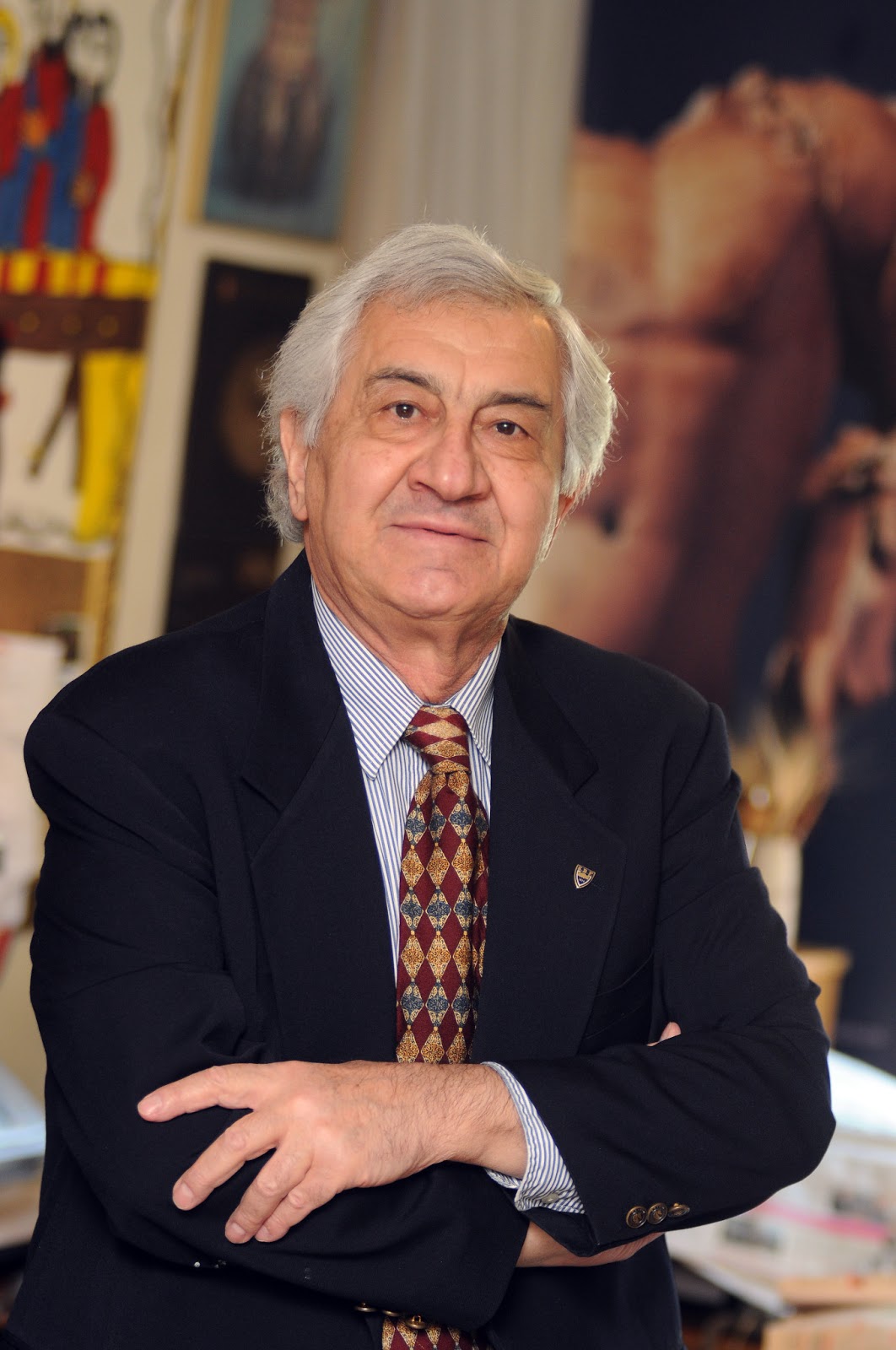
“I wish I had more time,” Özgen Acar—friend, co-author, and investigative journalist known for his masterful exposés on the looting of ancient art—wrote in his last communication to me. Özgen, born in Nigde, Turkey (Cappadocia region), had such a bold personality that I never really envisioned him running out of time.
Sadly, he died in October at age 86. Özgen had health issues for many years and was careful to drink decaf-only espresso but said two drinks at day’s end were advised as “good for the heart.” Michael DeBakey was his heart surgeon, the same as former Turkish president Turgut Özal.
Özgen did a lot of damage to the illicit antiquities trade through his explosive journalism.
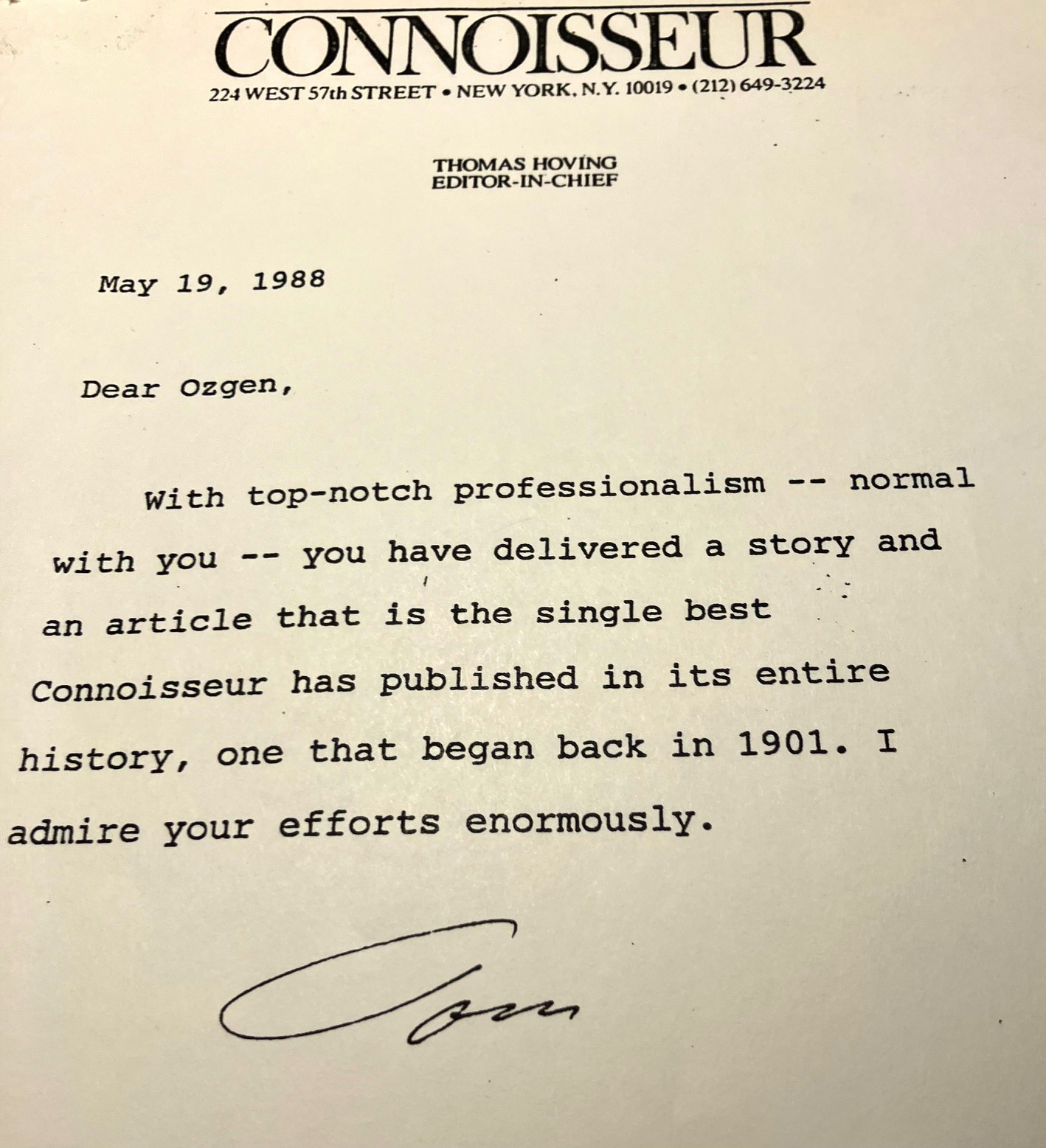

His reports embarrassed as well major US newspapers, who not only sold pricey ad space to dealers of smuggled ancient art but featured glowing articles about the loot for sale! Because of Özgen’s thorough story investigations he was also falsely accused in print by coin experts of being Turkish secret police.
So, it is not surprising that his obituary has not appeared in the US mainstream media.
It is actually breathtaking what Özgen accomplished. Helping to facilitate the repatriation of looted antiquities not only to Turkey but to other countries as well. Indeed, in 2008 he was awarded by Italy’s president the country’s highest honor—the Order of Merit—for his cultural contribution to Italy.
I first met Özgen in the late 1980s when he was chief correspondent in New York for Milliyet, following his time as the paper’s Ankara news director and decades after his important French Connection investigations as a young reporter.
He also established Reuters’ Ankara office and later served as Cumhuriyet’s editor in chief.
I was looking for new horizons in the late 80s. Özgen and I simply clicked and decided to collaborate on antiquities stories. I was a sort of Tonto to his Lone Ranger.
Then-collector Michael Steinhardt told me the walls of the Metropolitan Museum of Art shook when Özgen walked in.
Antiquities dealers liked to dump on one another in the 1980s and 90s and it was always amusing to interview them.
Among the projects Özgen and I collaborated on were two stories for Connoisseur magazine. One on the Phrygians, published in 1989, and the other on Turkish antiquities smuggler and master of fakes, Aydin Dikmen who Özgen thought was the inspiration for James Mellaart’s Anna Papastrati and his Dorak Treasure fantasy. Connoisseur ceased publication before our Dikmen story went to press.
I will always remember Özgen standing guard outside Dikmen’s residence in Munich while I rang the bell to his apartment. Özgen was known to the Turkish dealers operating in Munich and couldn’t make contact while we were there for that reason, although he told me at the time he was reluctant to get me involved: “It’s a dirty business,” he said.
Indeed, referring to Özgen—one Munich-based Turkish dealer who Özgen exposed put his arm around me at a major 1990 New York auction, whispering in my ear: “We are going to kill him.”
Özgen did have concerns for his family because of his investigations and took serious precautions.
Ultimately, he outlived many of the dealers he profiled and succeeded in helping to repatriate the Lydian Hoard (also known as Karun Treasure and/or Croesus Treasure);
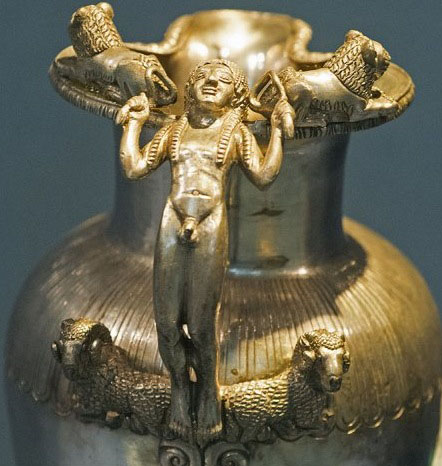 the Elmali coin hoard; statue of Tired Hercules; a relief of the satyr Marsyas (Özgen first spotted it at Bob Hecht’s New York gallery); a bronze Dionysus statue; a marble sarcophagus from Antalya, among other invaluable ancient art.
I, too, so wish Özgen—a magnificent man—had had more time. . .

 OSCILLATIONS