
Archaeological Institute
In a recent brilliantly argued critique about Türkiye’s Pre-Pottery Neolithic Göbeklitepe site (9500bce-8000bce), Erdem Denk, an Ankara University law professor who has also produced a documentary at Göbeklitepe says there is clear evidence of ritual there and of an inhabited settlement but not of religion, eviscerating the popular temple theory.
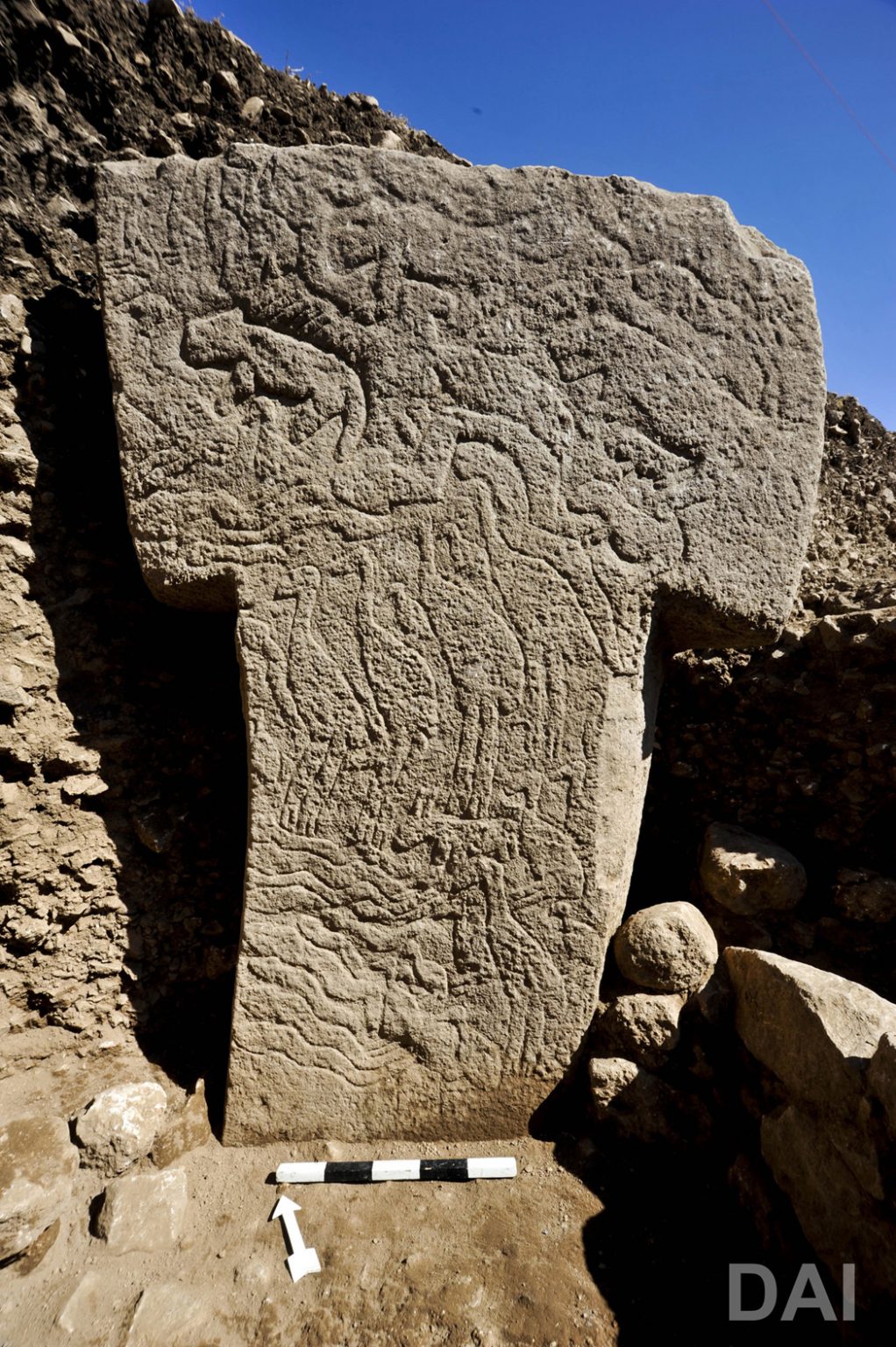
Only a fraction of the Göbeklitepe site has so far been excavated but as Denk points out the so-called monuments are actually rock reliefs (see above photo).
Funding ($365,514) from the John Templeton Foundation, which likes to pair religion and science has helped to keep the Göbeklitepe religious angle going just as it muddied the waters at Çatalhöyük on the heels of James Mellaart’s Dorak hoax.
In his article Denk refers to the “debate” surrounding Ian Hodder’s time as excavation director at Çatalhöyük following Mellaart’s dig; Hodder’s religion-slanted texts about the site; and his Templeton project sponsorship—linking in my 2017 interview with Hodder.
Hodder raised $15M for the Çatal dig, 25% of which came from Templeton. In the Hodder interview I cite British anthropologist Maurice Bloch, one of Hodder’s book authors:
Maurice Bloch, one of your own Çatal book authors has said pursuing a religion angle at Çatal is “a misleading wild goose chase” because humans only thought up religion 5,000 years ago at the earliest. Bloch says humans largely live in their reflective imagination, something that first arose 40,000 to 50,000 years ago. Here’s the Bloch quote:
“The Templeton initiative that led to the publication of this book was about religion at Çatalhöyük, yet this chapter has not mentioned the word once. This is no accident. The reason is that I am confident that there was no religion in Çatalhöyük, any more than there was among the Zafimaniry before Christianity arrived there. Looking for religion is therefore a misleading wild goose chase. . . . The kind of phenomena that the English word “religion,” and the associated word “belief,” can be made to evoke have, at most, a history of five thousand years. This is thousands of years after the establishment of Çatalhöyük.”
Nota bene: Fordham University anthropologist Allan Gilbert has commented on this story, as follows—
“We’ve had seminars on the Karahantepe and Göbeklitepe sites, and we know that prehistoric ritual behavior isn’t religious in the modern sense of the term. Sometimes, we’ll slip and use the term ‘religion’ in a very broad sense, but what went on in antiquity is still mostly unknown to us, and could better be described as varying kinds of ritual activity falling into what anthropologists call ‘magic,’ the belief/hope/tradition that particular actions will appeal to/appease/invoke a beneficial response from certain spirits/deistic entities that appear to have power over humans and their environment. This relationship to unseen supernatural forces may have begun earlier than most imagine, possibly Middle Paleolithic, and not limited to the Upper Paleolithic time of cave paintings and mobiliary art. We can’t prove much, but it’s a strong feeling, as unscientific as that sounds.


